


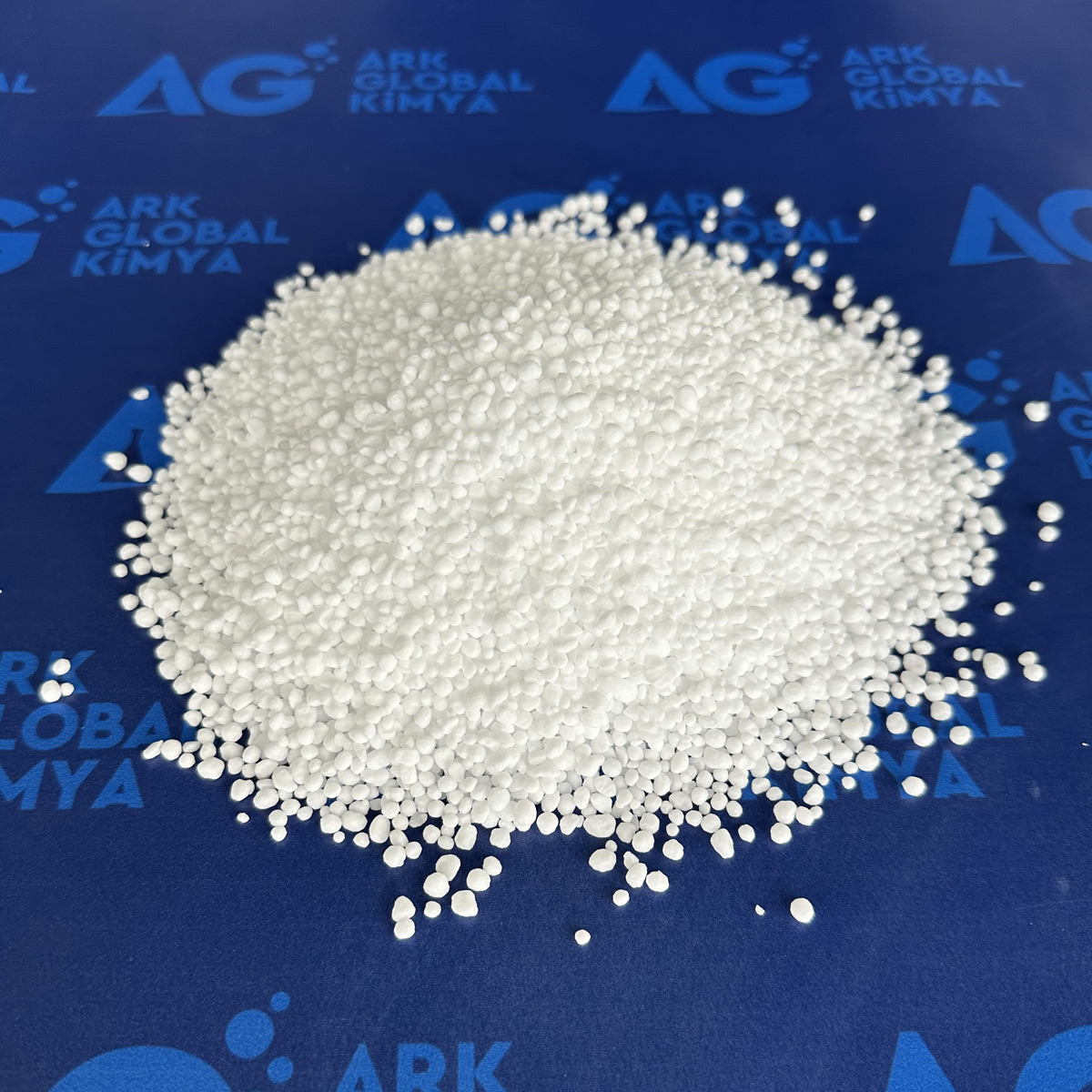
Urea (%46) Fertilizer
UREA 46 refers to a type of nitrogen fertilizer known as urea. The numbers “46” represent the percentage by weight of nitrogen in the fertilizer. Therefore, UREA 46 contains approximately 46% nitrogen.
Urea is a white, crystalline solid that is highly soluble in water. It is one of the most widely used nitrogen fertilizers in the world.
The high nitrogen content makes urea an efficient source of nitrogen for plants, as nitrogen is a crucial element for various biological processes, including the formation of amino acids, proteins, and chlorophyll.
As Ark Global Kimya, we do Urea Fertilizer wholesale and export in Turkey
Description
Key Features of UREA 46 Fertilizer:
High Nitrogen Content: With 46% nitrogen, urea is valued for its high nutrient concentration, providing a significant amount of nitrogen in a relatively small volume.
Versatile Application: Urea can be used on a variety of crops and plants, promoting vegetative growth, leaf development, and overall plant health.
Solubility: Urea dissolves readily in water, making it suitable for liquid fertilizer applications or for blending with other fertilizers.
Cost-Effective: Urea is often considered a cost-effective nitrogen fertilizer, providing a concentrated source of nitrogen.
Hygroscopic Nature: Urea has a tendency to absorb moisture from the air, so it should be stored in a dry environment to prevent caking.
What is the Advantage of use UREA 46 fertilizer?
UREA 46 fertilizer, with its high nitrogen content, offers several advantages for plant growth and agriculture and benefit:
High Nitrogen Concentration: UREA 46 contains approximately 46% nitrogen, providing a concentrated and efficient source of nitrogen for plants. Nitrogen is a vital nutrient for plant growth, playing a key role in protein synthesis, leaf development, and overall vegetative growth.
Versatility: Urea can be used on a wide range of crops, including cereals, vegetables, fruits, and ornamental plants. Its versatility makes it a popular choice for various agricultural applications.
Promotes Vegetative Growth: The high nitrogen content in UREA 46 promotes vigorous vegetative growth, leading to healthier and more productive plants. This is particularly important during the early stages of plant development.
Efficient Nitrogen Release: Urea undergoes a two-step conversion process in the soil, where it is first hydrolyzed to ammonium and then nitrified to nitrate. This gradual release of nitrogen helps provide a sustained nutrient supply to plants over time.
Cost-Effective: Urea is often considered a cost-effective nitrogen fertilizer. Its high nutrient concentration means that a relatively small amount of product is needed to deliver a significant dose of nitrogen to plants.
Compatibility with Blends: UREA 46 can be easily blended with other fertilizers to create custom formulations that suit specific crop and soil nutrient requirements. This flexibility allows for tailored nutrient management strategies.
Solubility: Urea is highly soluble in water, making it suitable for both soil and foliar applications. This solubility ensures rapid nutrient availability to plants after application.
Reduced Soil Acidification: Compared to some other nitrogen fertilizers, such as ammonium-based fertilizers, urea has a lower potential to acidify the soil. This can be advantageous in situations where maintaining soil pH is a concern.
It’s important to note that while UREA 46 provides significant benefits, proper application practices, including following recommended rates and timing, are crucial to maximize its advantages and minimize the risk of environmental impact. Additionally, comprehensive nutrient management, considering other essential nutrients and local soil conditions, is key to achieving optimal plant growth.
Here are some types of plants for which UREA 46 fertilizer is commonly used:
Cereals: Crops such as wheat, barley, rice, and corn can benefit from UREA 46 during their early growth stages to support vigorous vegetative development.
Oilseed Crops: Plants like soybeans and canola can benefit from UREA 46, especially during phases of rapid vegetative growth.
Leafy Vegetables: Leafy greens, including lettuce, spinach, and kale, can benefit from the nitrogen-rich UREA 46 for the development of lush and green foliage.
Fruiting Vegetables: Plants like tomatoes, peppers, and eggplants, which produce fruits, can benefit from UREA 46 to support overall plant growth and flowering.
Root Vegetables: Root crops such as potatoes, carrots, and beets may benefit from UREA 46, especially during the early stages of root development.
Fruits and Berries: Fruit-bearing trees and shrubs, including apple trees, citrus trees, strawberries, and blueberries, may benefit from UREA 46 during periods of active growth and fruit development.
Grass and Forage Crops: UREA 46 can be applied to grasslands and pastures to support the growth of forage crops, providing quality feed for livestock.
Ornamental Plants: UREA 46 can be used on ornamental plants, including flowers, shrubs, and trees, to promote healthy growth and vibrant foliage.
Grains: Various grains, such as oats, barley, and rye, can benefit from UREA 46 during their growth stages.
Legumes: While legumes can fix nitrogen through symbiotic relationships with nitrogen-fixing bacteria, supplemental nitrogen from UREA 46 may still be beneficial, especially during phases of rapid growth.
How to Apply UREA 46 Fertilizer?
The application of UREA 46 fertilizer involves considerations of the specific needs of the plants, soil conditions, and proper application techniques.
Here’s a general guide on how to apply UREA 46 fertilizer:
Soil Testing: Before applying UREA 46 or any fertilizer, conduct a soil test to assess nutrient levels and pH. Soil testing provides valuable information to determine the specific nutrient requirements of your plants.
Calculate Application Rates: Determine the appropriate application rate based on the nitrogen needs of your crops, as well as the nitrogen content of the UREA 46 fertilizer. Follow recommended rates provided by agricultural experts or the fertilizer manufacturer.
Timing of Application: Consider the growth stage of your plants and their specific nutrient requirements. UREA 46 is often applied during periods of active growth or before critical stages such as flowering or fruiting.
Broadcasting: Spread the fertilizer evenly over the soil surface.
Band Placement: Apply the fertilizer in concentrated bands near the plant roots.
Topdressing: Sprinkle the fertilizer around the base of the plants.
Incorporation: Incorporate the fertilizer into the soil if applicable. For broadcasting or topdressing, light incorporation can enhance nutrient distribution. Avoid deep placement, as nitrogen loss through volatilization may occur.
Watering: Water the area after applying UREA 46 to help dissolve the fertilizer and facilitate nutrient uptake by plant roots. Adequate moisture is crucial for nitrogen assimilation.
Avoid Foliar Contact: UREA 46 is typically applied to the soil, and contact with plant foliage should be minimized. Direct contact with leaves can lead to leaf burn.
Consider Split Applications: For certain crops, especially those with extended growing seasons, consider split applications of UREA 46 to provide a steady supply of nitrogen throughout the growing period.
Environmental Considerations: Be mindful of environmental conditions, such as rainfall or irrigation, to reduce the risk of nitrogen loss through leaching. Avoid application during heavy rainfall to prevent runoff.


Reviews
There are no reviews yet.